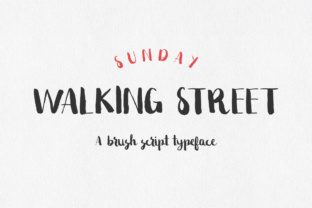
Sunday Walking Street Typeface: A Relaxed Brush Font for Handmade Brands
I was sitting at my craft table on a quiet Sunday morning, surrounded by half-finished candle jars and stacks of kraft paper tags, when I realized my design process needed a shift. For months, I had been relying on rigid geometric sans serifs for my boutique labels, but the products felt cold. They lacked the warmth of the hand-poured wax inside them. That is when I pulled up Sunday Walking Street, a relaxed hand-painted brush font from Script Amp, and decided to test it against my usual go-to typefaces. What started as a quick experiment turned into a complete overhaul of my shop’s visual identity.
This isn’t just another digital script that looks messy when scaled down. Designed with a real brush on paper and digitized for optimization, Sunday Walking Street captures the organic flow of calligraphy without sacrificing legibility. It feels like a personal note rather than a corporate mandate. In this review, I’ll walk you through how this creative font performs on physical product packaging, stickers, and digital downloads, based on real-world testing in my handmade business.
The Visual Personality of Sunday Walking Street
When you first open the font files, the first thing you notice is the texture. Because it was designed with a real brush, there are subtle variations in stroke weight that mimic actual ink on paper. This gives the typeface a premium feel that flat vector fonts often lack. It sits comfortably in the category of a modern typography style—relaxed yet structured enough to be readable.
The mood is undeniably warm and inviting. It evokes feelings of slow living, artisanal craftsmanship, and weekend leisure. For makers who sell items like bath bombs, handmade soaps, or artisanal jams, this font aligns perfectly with the brand story. It doesn’t scream for attention; instead, it invites the customer to linger. The characters have a natural rhythm, making it ideal for short phrases, names, and titles where decorative wording can shine without overwhelming the eye.
However, it is important to recognize its limitations. This is a display font, not a body copy font. The brush strokes are expressive, which means they require breathing room. If you try to squeeze too much text into a small space, the personality gets lost in the clutter. But used correctly, it acts as a powerful anchor for your brand identity, instantly signaling to customers that your products are made with care and intention.
Testing on Physical Product Materials
The true test of any font for a maker is how it holds up on physical materials. I printed Sunday Walking Street on several different substrates to see how it translated from screen to reality. Here is what I found after testing it on real product mockups and shop materials.
- Candle Labels: I used the font for the main title on my soy candle labels. The contrast between the bold brush strokes and the clean kraft paper background created a stunning farmhouse aesthetic. It looked especially good when paired with a simple sans serif font for the ingredient list below. The readability remained high even at smaller sizes, provided the label wasn’t too crowded.
- Sticker Sheets: When designing sticker sheets for planners and water bottles, I noticed that the font’s fluid lines worked beautifully for motivational quotes. However, for very tiny cuts under 0.5 inches, the finer details of the brush texture can get lost. I recommend keeping the minimum size above 12pt for optimal clarity on small vinyl stickers.
- Boutique Tags: Hanging tags for clothing or jewelry benefited greatly from this typeface. The handwritten font style added a touch of elegance that standard print shops couldn’t replicate. It made each tag feel like a unique piece of art rather than a mass-produced accessory.
- Packaging Design: On larger boxes and mailers, the font served as an excellent hero element. I placed it over textured backgrounds and solid colors alike, and it maintained its visual impact. It helped elevate the perceived quality of the unboxing experience, making customers feel like they were receiving a gift.
One critical lesson I learned was about spacing. Because the letters have such distinct character, tight kerning can make the text look jagged. I had to manually adjust the tracking to let the curves breathe. This extra step paid off, resulting in a cleaner, more professional finish on all my printed cards and invitations.
Readability and Production Considerations
While Sunday Walking Street is charming, it is not suitable for every part of your product design. Avoid using it for dense label information, technical product instructions, or long paragraphs. The human brain scans text quickly, and decorative elements can slow down that process. For essential details like care instructions, ingredients, or legal disclaimers, stick to a clean sans serif font or a simple serif font.
If you are using cutting machines like Cricut or Silhouette, be mindful of the cut lines. The complex shapes of some letters may require slower cutting speeds and sharper blades to ensure clean edges, especially on thicker cardstock. Always do a test cut before committing to a full run of packaging or merchandise.
Font Pairing for a Cohesive Brand Identity
No single font can do everything, and Sunday Walking Street is no exception. Its strength lies in its ability to complement other typefaces. To create a balanced design system for your shop, I recommend pairing it with a neutral, highly readable font.
A classic combination is Sunday Walking Street for headlines and logos, paired with a minimalist sans serif font for body text. This creates a clear visual hierarchy. The brush font draws the eye, while the sans serif provides the necessary information without competing for attention. For example, on my wedding stationery templates, I used Sunday Walking Street for the couple’s names and "Save the Date" headers, while using a delicate serif font for the event details. The result was elegant, timeless, and easy to read.
You can also experiment with pairing it with a bold display font for secondary accents, though this requires careful layout management to avoid visual chaos. The key is consistency. Once you choose a pairing, apply it across all your design assets—from social media graphics to email newsletters—to build strong brand recognition.
Digital Applications and Commercial Licensing
While my focus has been on physical goods, Sunday Walking Street also shines in the digital realm. It works wonderfully for website headers, blog post titles, and online store banners. The relaxed vibe translates well to web design, creating a welcoming atmosphere for visitors browsing your portfolio or shop.
Before you start selling designs that feature this font, however, you must check the commercial font licensing. Most premium fonts allow you to use them in physical products you sell (like t-shirts, mugs, and tote bags), but they often restrict embedding the font file itself in digital downloads or software. Make sure you understand the terms set by Script Amp. Typically, you can include the font in a template if you instruct customers to install it themselves, but you cannot redistribute the font file directly.
Additionally, verify the included styles. Check if the package contains alternates, ligatures, swashes, and multiple weights. These features add depth to your designs, allowing you to customize text without needing multiple font purchases. Multilingual support is also worth checking if you plan to cater to international audiences.
Final Practical Tips for Makers
To get the most out of Sunday Walking Street, treat it as a special accent rather than a workhorse. Use it for logo design, editorial design elements, and seasonal craft designs like holiday tags or summer sale banners. Let it bring that human touch to your automated processes.
Remember that good design is about balance. The charm of a hand-painted brush font lies in its imperfections, but those imperfections must be controlled. By testing it on real materials, respecting its readability limits, and pairing it wisely, you can create products that don’t just look good, but feel authentic. Whether you are a hobbyist or running a full-time Etsy shop, adding Sunday Walking Street to your toolkit can help your brand stand out in a crowded marketplace.